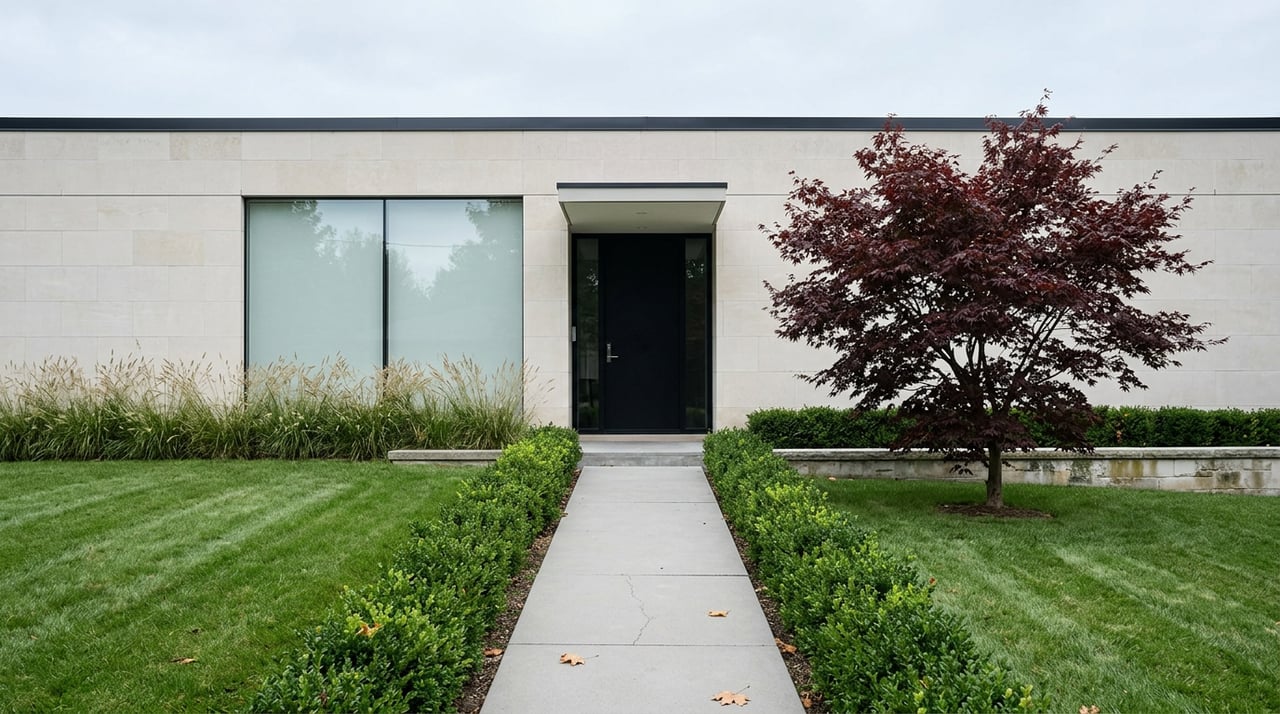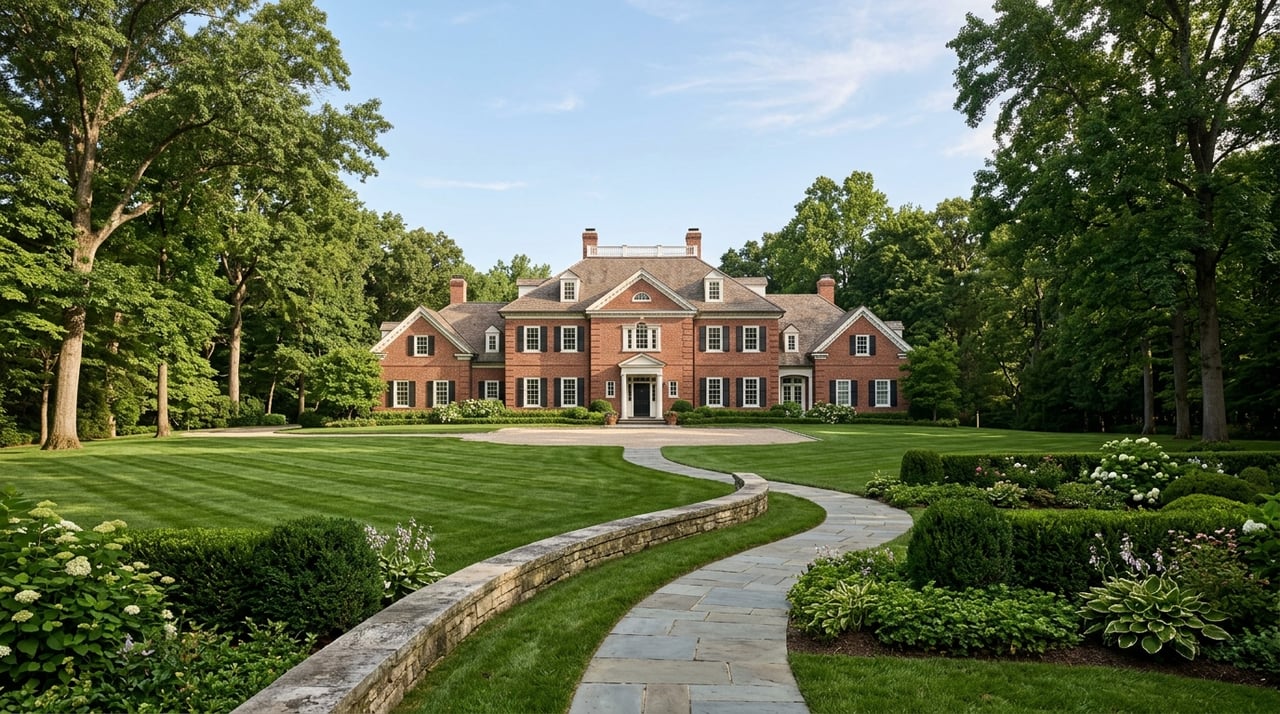
If you are trying to understand Wyckoff, start with this: it is not a town of sharply defined, city-style neighborhoods. Instead, Wyckoff feels more like a collection of residential pockets shaped by road corridors, lot sizes, and home styles. If you are buying or selling here, that matters because it changes how you compare streets, evaluate value, and picture day-to-day living. Let’s break down how Wyckoff neighborhoods and home styles really work.
How Wyckoff feels as a market
Wyckoff is a northwest Bergen County township with an estimated 17,366 residents in 2024 across 6.59 square miles of land. Township materials describe it as a tree-lined residential community, and that description fits the local housing pattern well.
This is also a close-in suburban commuter market, not a far-out exurban one. Wyckoff sits roughly 25 to 27 miles from Midtown Manhattan and New York City, which helps explain why it appeals to buyers who want more space while staying connected to the region.
The housing mix is heavily single-family and owner-occupied. Census data reports a 92.7% owner-occupied housing rate and a median owner-occupied home value of $925,700. Wyckoff’s 2025 draft housing plan adds another important detail: 85.9% of homes are detached one-family residences, with another 7.2% classified as single-family attached.
That profile gives the town a distinctly residential feel. It also means that when you shop in Wyckoff, you are usually comparing one home site, lot, and layout against another, rather than choosing among large clusters of multifamily options.
Why neighborhoods in Wyckoff work differently
In some towns, neighborhood names tell you almost everything you need to know. In Wyckoff, the better approach is to look at zoning districts, major roads, and the overall setting of each pocket.
Township zoning materials identify residential areas such as R-15 and RA-25. The dimensional schedule sets minimum lot sizes at 15,000 square feet in R-15 zones and 25,000 square feet in RA-25 zones. For buyers, that can be a more useful filter than a neighborhood label because it affects spacing, privacy, and the scale of surrounding homes.
Wyckoff is also largely built out. According to the township’s housing materials, only a small share of developable open space remains. In practical terms, that means you are more likely to see rebuilds, additions, and custom infill than brand-new large subdivisions.
Sicomac and the west-northwest section
One of the best-known local references is Sicomac. Township history says the old Sicomac name survives in the southwestern section, while the environmental inventory notes the Sicomac Road region along the northwest border with Franklin Lakes.
For many buyers, this part of town reads as established and residential. Historic-home inventories identify older houses along corridors such as Sicomac, Wyckoff, Crescent, Godwin, and Franklin Avenues, which helps explain the mature, long-settled feel you notice in these areas.
This does not mean every home is historic in the formal sense. It means the road network and housing pattern often reflect older settlement and long-standing residential use, which can shape curb appeal, lot rhythm, and the character of the streetscape.
Franklin Avenue and the civic core
If you want a pocket of Wyckoff that feels more compact and convenience-oriented, the area around Franklin Avenue stands out. Around Memorial Town Hall, the police headquarters, the public library, and nearby parks, the town has a more centralized civic feel.
This area also connects you to everyday destinations. Memorial Field and Zabriskie Pond Park are nearby, and the concentration of public buildings gives this part of Wyckoff a practical, service-centered identity.
For buyers, this kind of location can be appealing if you like having core town resources close at hand. For sellers, it is a reminder that convenience within Wyckoff is often tied to civic geography rather than a formal downtown neighborhood label.
Larger-lot residential pockets
Lot size matters in Wyckoff because it changes how a street lives. In RA-25 areas, the minimum lot size is 25,000 square feet, while R-15 requires 15,000 square feet. That difference can influence setbacks, yard size, and the visual spacing between homes.
If you are comparing properties, pay attention to the zoning context in addition to the home itself. Two houses with similar square footage can feel very different depending on how much land surrounds them and how the block is laid out.
Because Wyckoff is largely built out, newer homes in these pockets often arrive as replacements for older homes or as significant renovations. That creates an interesting mix where traditional neighborhood patterns remain, even as individual homes are updated or rebuilt.
Wyckoff home styles by era
Wyckoff’s housing stock tells a story of postwar growth followed by selective newer construction. Township housing data says development did not begin in earnest until the 1950s. About 20.8% of homes were built in the 1950s, 25.6% in the 1960s, and 11.5% were built since 2000.
That timeline helps explain why certain styles show up again and again. You will commonly see ranches, Cape Cods, split-levels, and colonials, with newer construction often designed in a traditional Bergen County style.
Town records specifically reference 1950s ranch-style homes, Cape Cods built around 1950, split-level homes, Dutch Colonial styles, and newer homes intended to preserve a colonial or Dutch Colonial look. For buyers, this means Wyckoff offers a range that can suit very different priorities, from original postwar charm to larger replacement homes with a classic exterior language.
What ranches, Capes, splits, and colonials mean here
A ranch in Wyckoff often points to the postwar building wave and may appeal to buyers who want main-level living or a footprint that can be expanded over time. A Cape Cod may offer a compact traditional form with dormered upper-level space and flexible room use.
Split-level homes are another familiar local type. They can be practical for buyers who want separation between living areas without the full vertical feel of a taller colonial.
Colonials and Dutch Colonials tend to match what many buyers picture when they think of classic suburban Bergen County homes. In Wyckoff, you may find both older versions and newer builds that echo those traditional forms.
Home size is a big part of the appeal
One detail that stands out in Wyckoff is the size profile of the housing stock. The township’s draft housing plan says 59.2% of homes have four or more bedrooms, and the median home has eight rooms. It also notes that 39.3% of homes have nine rooms or more.
That is important because it helps explain why Wyckoff often feels spacious, even when you are looking at older homes. Much of the inventory reads as full-size suburban housing rather than compact starter-home stock.
If you are a buyer, this can open up options across different eras of construction. If you are a seller, it highlights why careful positioning matters. Buyers are not just comparing style. They are often comparing usable scale, room count, and flexibility.
Parks and open space shape daily life
Wyckoff’s suburban feel is not only about houses. It is also tied to open space and public amenities. Municipal statistics list 292.85 acres of open space and conservation area, which is a meaningful figure for a town of this size.
The township inventory includes Wyckoff Community Park, Gardens of Wyckoff Nature Sanctuary, Russell Farms Community Park, Zabriskie Museum, Gardens and Pond Park, Sicomac Avenue Woods, Pulis Soccer Field, and the Town Hall Athletic Complex. A 2023 notice for Memorial Field Athletic Complex improvements also called for an ADA-compliant trail connecting the turf field, baseball field, and family playground.
For many buyers, these features help define the town just as much as the housing does. They support the sense that Wyckoff is a residential community with established public amenities woven into everyday life.
Commuting and convenience in Wyckoff
For households balancing space with access, Wyckoff’s commuter practicality is part of the appeal. In addition to its location within roughly 25 to 27 miles of Midtown Manhattan, the township offers a park-and-ride permit lot at Cornerstone Christian Church at the corner of Wyckoff and Russell Avenues.
Daily conveniences are also fairly easy to identify because they cluster in the civic core. The Wyckoff Free Public Library is on Woodland Avenue, Town Hall is on Franklin Avenue, and police headquarters are on Scott Plaza off Franklin Avenue.
This is useful when you are deciding between one section of town and another. Some areas may feel more tucked away, while others place you closer to civic services and community facilities.
A practical way to compare homes in Wyckoff
If you are early in your search, try using three filters first:
- Lot size and zoning context
- Construction era
- Original home vs. rebuild or major renovation
These filters often tell you more than a neighborhood nickname alone. In a town like Wyckoff, where the market is dominated by detached single-family homes and the land pattern is already established, those details shape both lifestyle and value.
For sellers, the same framework can help you understand your position in the market. Buyers usually want to know not just what your home looks like, but how it fits into the broader Wyckoff pattern of lot size, style, and location.
Why this matters for buyers and sellers
Wyckoff is easy to appreciate, but it takes some local context to read correctly. The town offers a strongly residential setting, a high share of owner-occupied single-family homes, recognizable postwar architecture, and larger home sizes than many buyers expect.
At the same time, the differences between one pocket and another can be subtle. A home near the civic core may offer a different day-to-day experience than one in a larger-lot section or along an older established corridor. Understanding those distinctions helps you make a smarter move, whether you are purchasing your next home or preparing one for the market.
If you want help evaluating Wyckoff block by block, style by style, or pricing your home against the right local comparables, connect with Daniel Chamoun, REALTOR® for a personalized consultation.
FAQs
How are neighborhoods defined in Wyckoff, NJ?
- Wyckoff is often understood through road corridors, residential pockets, and zoning districts like R-15 and RA-25 rather than strict, city-style neighborhood boundaries.
What home styles are common in Wyckoff, NJ?
- Common Wyckoff home styles include ranches, Cape Cods, split-levels, colonials, and Dutch Colonials, with both original postwar homes and newer traditional-style rebuilds in the market.
Are most homes in Wyckoff, NJ single-family?
- Yes. Township housing data says 85.9% of homes are detached one-family residences, and another 7.2% are single-family attached.
Are lot sizes different across Wyckoff, NJ?
- Yes. Wyckoff zoning includes districts such as R-15 with 15,000-square-foot minimum lots and RA-25 with 25,000-square-foot minimum lots.
What makes Wyckoff, NJ appealing to commuters?
- Wyckoff is roughly 25 to 27 miles from Midtown Manhattan and includes a township park-and-ride permit lot at the corner of Wyckoff and Russell Avenues.
What should buyers focus on when comparing homes in Wyckoff, NJ?
- A smart starting point is to compare lot size, construction era, and whether a property is an original home, a rebuild, or a substantially updated home.